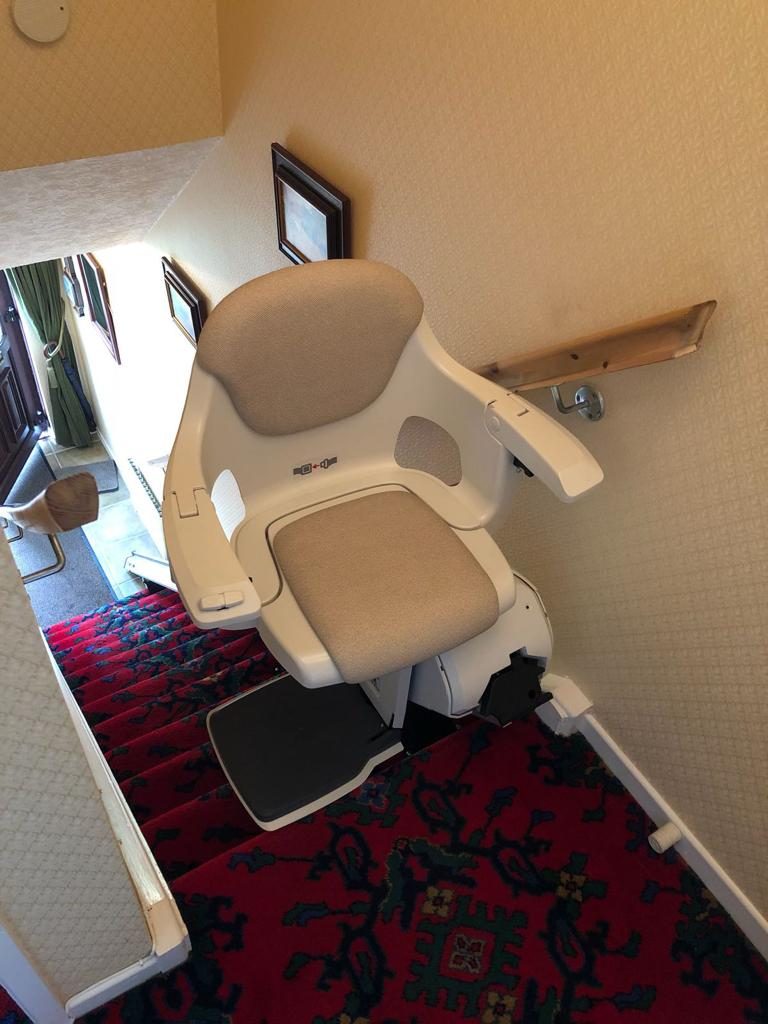
Electrical connections deliver power to a stairlift's motor, controls and safety systems, so they play a vital part in safe, reliable operation. This guide explains how those connections work, how they are looked after, and why any work on them should be left to qualified engineers.
A stairlift's electrical system includes the charger, batteries, wiring harness, connectors and control board. Together they carry power and signals between the controls, the motor and the safety sensors. All of these parts are enclosed within the carriage and covers to protect both the components and the user.
Types of Electrical Connections
Stairlifts use several types of connection. Plug-and-socket connectors join components such as the batteries and control panel, terminal blocks act as junction points where wires meet, and some connections are fixed directly to the motor or circuit boards.
The only connection a homeowner normally deals with is the charger plug, which goes into a standard household socket near the stairs. Everything else is fitted by the installing engineer and checked at each service.
Importance of Regular Maintenance
Over time, dust, damp or corrosion can affect electrical connections and lead to erratic movement or the lift stopping altogether. That is why connections are inspected at every professional service. The engineer checks for wear, corrosion and loose connectors, tests the batteries and charging system, and confirms that the safety features respond correctly.
Never open the covers or attempt to clean, tighten or repair electrical connections yourself. Doing so can cause electric shock, damage the lift and void your warranty.
Checklist for Electrical Safety
- Charger plugged in and socket switched on
- Lift parked at a charging point when not in use
- Any damaged cable or plug reported to an engineer straight away
- Covers left closed and electrics left untouched
- Professional service booked at least once a year
Frequently Asked Questions
What should I do if my stairlift stops working?
Check that the charger socket and key switch are on, the lift is parked on charge and the rail is clear. If it still will not work, call a qualified engineer.
How often should the electrical connections be checked?
At every professional service, which should be at least once a year, or more often for outdoor or heavily used lifts.
Can I fix minor electrical issues myself?
Only the simplest checks, such as wiping the rail with a dry cloth, keeping the lift on charge and checking the socket and key switch. Repairs, lubrication, battery replacement and any electrical work must be carried out by a qualified engineer.
Quick answers
What types of electrical connections are used?
Most stairlifts connect to a standard plug socket near the top or bottom of the stairs through a charger. The rail itself carries low-voltage power to the carriage.
How to troubleshoot stairlift connections?
Check that the plug socket is switched on and the lift is parked at a charging point. If it still will not work, contact a qualified stairlift engineer. Do not open or repair the electrics yourself.
What safety standards apply to electrical connections?
Stairlift installations in Northern Ireland should meet the relevant British and European safety standards for stairlifts, and any electrical work should be carried out by a qualified electrician.
Guides in this section
Troubleshooting Stairlift Power Connection Issues in Northern Ireland
Troubleshooting stairlift power connection issues can help identify and resolve common electrical problems.
Read the guideChecklist for Stairlift Electrical Setup in Belfast
Checklist for stairlift electrical setup provides essential steps for safe installation and operation.
Read the guideGuide to Wiring a Stairlift Power Supply in Northern Ireland
Guide to wiring a stairlift power supply for safe and efficient electrical connections.
Read the guide