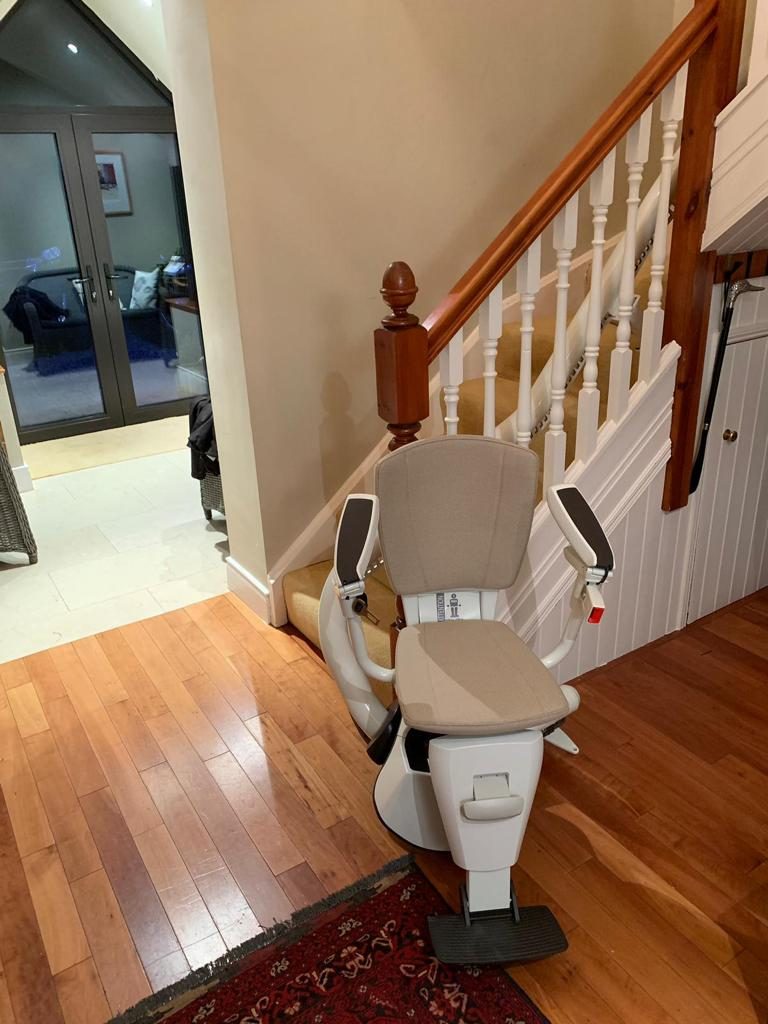
Selecting the appropriate stairlift is crucial for enhancing mobility and ensuring safety within your home. Personal care equipment, such as stairlifts, plays a vital role in maintaining independence for individuals with limited mobility. This guide will help you navigate the key considerations when choosing a stairlift, ensuring that you make an informed decision tailored to your specific needs.
Assess Your Staircase Configuration
The first step in selecting a stairlift involves understanding your staircase configuration. Different types of staircases require different solutions. For straight stairs, a straight stairlift is typically sufficient; however, if your staircase has curves or landings, you'll need a curved stairlift designed specifically for those complexities.
Measure the width and steepness of your staircase accurately. A standard straight stairlift requires at least 760mm of width to operate safely. If you have tight turns or multiple landings, consider consulting with a professional installer who can provide insights into custom solutions that fit precisely within your space constraints.
Evaluate Weight Capacity and User Needs
Next, evaluate the weight capacity required for the user. Most residential stairlifts accommodate up to 135kg (21 stone); however, some models offer higher capacities. It’s essential to select a model that meets or exceeds this requirement based on the user's weight.
Additionally, consider any special needs related to comfort and accessibility features. Some models come equipped with swivel seats for easier entry and exit at both ends of the staircase. Others may include additional safety features like seatbelts or armrests that enhance stability during use.
Review Power Options and Safety Features
Stairlifts are powered by either AC mains electricity or battery systems. Battery-operated lifts are beneficial during power outages since they can still function without external power sources. Ensure that any battery system includes an automatic charging feature when not in use.
Safety features are paramount when selecting personal care equipment like stairlifts. Look for models equipped with sensors that detect obstacles on the stairs and stop automatically if necessary. Additional safety measures may include emergency stop buttons and backup systems in case of power failure.
Checklist: Key Considerations When Choosing a Stairlift
- Staircase Type: Straight vs Curved
- Measurements: Width & Steepness
- Weight Capacity: Minimum requirements
- User Comfort Features: Swivel seats & armrests
- Power Source: AC vs Battery-operated
- Safety Features: Obstacle detection & emergency stops
Frequently Asked Questions (FAQ)
What is the average cost of installing a stairlift?
Pricing depends upon the individual installation, and it will be in the region of £2,000 to £5,000. Straight stairlifts with no extras will be in the region of £2,000 including installation, at the lower end of the scale. More complex stairwells may require a curved stairlift, which may need custom-made parts, and these can cost as much as £5,000 including installation. The exact price will be provided in a written quotation that is based on a survey and conversation about your individual needs.
How long does it take to install a stairlift?
Installation usually takes between four to six hours depending on complexity but can vary based on individual circumstances.
Can I rent rather than buy a stairlift?
Yes, many companies offer rental options which can be more economical if you only need temporary assistance.
Are there maintenance requirements after installation?
Regular maintenance checks are recommended every year to ensure optimal performance and safety of your lift.
By considering these factors carefully—staircase configuration, weight capacity needs, power options, and essential safety features—you can confidently choose the right stairlift tailored specifically for your home environment so you can maintain independence while ensuring safety throughout your daily routines.
Quick answers
What types of personal care equipment are available?
Personal care equipment for the home includes stairlifts, bath lifts, shower seats, raised toilet seats, grab rails, riser recliner chairs, hoists and walking aids. They support everyday tasks such as washing, dressing and getting around.
How does personal care equipment improve mobility?
It makes everyday movements safer and less tiring. For example, a stairlift gives access to the bathroom upstairs and grab rails give support when standing or sitting, helping people stay independent for longer.
What features should I consider in personal care equipment?
Look for safety, comfort, ease of use, good build quality and a product suited to both the user and the space. For larger items like stairlifts, choose a supplier that surveys, installs and services the equipment.
Guides in this section
Understanding Stairlift Warranties in Northern Ireland
Understanding stairlift warranties helps homeowners make informed decisions about coverage and protection.
Read the guideStairlift Safety Inspection Requirements in Belfast
Stairlift safety inspection requirements include guidelines for ensuring safe operation and compliance.
Read the guide