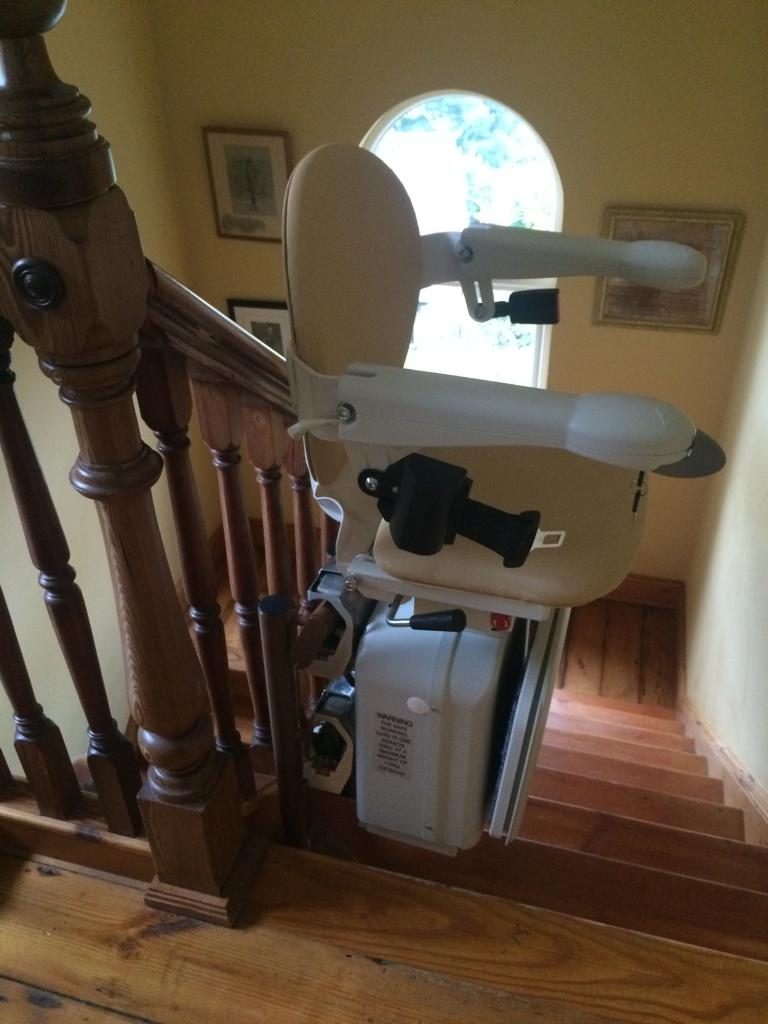
Evaluating a stairlift requires careful consideration of various factors to ensure it meets your specific needs. This stairlift evaluation checklist will guide you through the essential criteria for assessing options available in the market. By following this checklist, you can make an informed decision that enhances mobility and safety within your home or business.
Assess Your Space Requirements
Begin by evaluating the physical space where the stairlift will be installed. Measure the width and height of your staircase to determine what type of stairlift is suitable. Standard straight stairlifts require a minimum width, typically around 660mm, while curved models may need additional clearance due to their design.
Consider any obstacles along the staircase, such as landings or turns, which could affect installation. If you have a narrow staircase or complex layout, a custom curved stairlift might be necessary. Ensure that there is adequate headroom above the stairs; most installations require at least 1.8 metres of vertical clearance for safe operation.
Evaluate User Needs and Preferences
Next, assess who will be using the stairlift and their specific requirements. Consider factors such as weight capacity; most standard models accommodate up to 135kg (21 stone) but check manufacturer specifications for higher capacities if needed.
Evaluate user comfort features like seat size and padding. A swivel seat can enhance safety when getting on and off at landings. Additionally, look for controls that are easy to use—some models come with remote controls or joystick options tailored for those with limited dexterity.
Explore Additional Features
Stairlifts come equipped with various features that enhance usability and safety. Look for models with safety sensors that detect obstacles on the stairs; these prevent accidents by stopping movement if something obstructs the path.
Battery backup systems are crucial during power outages; they ensure continued operation without interruption. Some advanced models offer smooth starts and stops, reducing jarring movements when ascending or descending stairs—a vital feature for users sensitive to sudden motions.
Checklist
Space Requirements
- Measure staircase width (minimum 660mm).
- Check headroom clearance (at least 1.8 metres).
- Identify any obstructions along the path.
User Needs
- Determine weight capacity requirements.
- Assess seat comfort (size/padding).
- Evaluate control accessibility (remote/joystick).
Safety Features
- Safety sensors present?
- Battery backup functionality?
- Smooth start/stop mechanisms?
Frequently Asked Questions
What types of stairlifts are available?
There are primarily two types: straight and curved stairlifts. Straight lifts follow a linear path along straight stairs, while curved lifts navigate bends or turns in more complex layouts.
How long does installation take?
Installation time varies based on complexity but generally takes between one to three hours for standard installations.
Are there maintenance requirements?
Regular maintenance ensures optimal performance; manufacturers often recommend annual inspections to check mechanical components and battery health.
By adhering to this comprehensive checklist during your evaluation process, you can confidently select a stairlift tailored to your unique situation so you can improve mobility safely within your home or business environment.
Quick answers
What should I include in a stairlift evaluation checklist?
Include the lift's age and history, rail and carriage condition, battery health, safety sensors, seat belt, swivel lock, controls, warranty and the availability of parts.
How do I assess a used stairlift?
Have a qualified engineer inspect the rail, drive, batteries and safety features, and ask for details of the refurbishment and warranty.
What are key safety features for stairlifts?
Make sure the stairlift has a seat belt, obstruction sensors, a swivel seat that locks, a key switch, a soft start and stop and battery backup, and that each one works properly.
Related guides
Used Stairlift Condition Assessment Guide for Buyers
Used stairlift condition assessment guide offers essential tips for evaluating quality and safety.
Read the guideComparing Used Stairlift Features in Belfast
Comparing used stairlift features helps you evaluate options for mobility solutions.
Read the guideHow to Evaluate a Used Stairlift S Safety Standards
How to evaluate a used stairlift s safety standards by checking key safety features and compliance.
Read the guideEssential Questions for Buying a Used Stairlift
Essential questions for buying a used stairlift include safety, warranty, and installation considerations.
Read the guideFactors Affecting the Value of a Used Stairlift in Northern Ireland
Factors affecting the value of a used stairlift include condition, age, and features.
Read the guide